
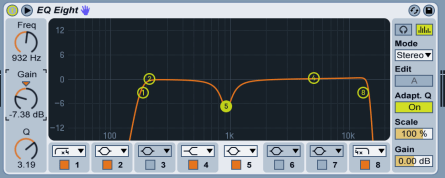
Although mixing and mastering falls on the engineering side of things, in many ways it goes hand-in-hand with producing. There are producers who have their own engineers so all they do is produce. Likewise, there are engineers who can’t play a single lick on a piano. However, even when producing at a beginner level, you inevitably run into some aspects of mixing. Technically, even if you turn the volume of a snare down by instinct you are layering, which is part of mixing. With that being said, here is a very basic tip that will improve your sound and clean up your mix. In any mix, there will be frequencies that are not needed. Unneeded energy in an instrument or an entire mix adds ‘mud’ which is the opposite of clarity. Music should always sound clear yet full. Eliminating frequencies that aren’t contributing to your sound will noticeably improve the quality of the overall mix. For example, a common area that has excessive energy is 200Hz and 300Hz. This may not be the case for every mix you work on, however it is known to be a muddy range. To fix it, use a notch or bell curve EQ and cut (decrease the volume) that frequency out. Before you do that however, you should determine what exact frequency is causing mud and needs the attention. Use the solo feature within an Equalizer to hear specific frequencies isolated from the rest of the sound. This way, you can sweep through the frequency range and stop when you hear a frequency that is unneeded or too much.

 Music Production - All You Need To Know